

Commentary
In Colombia and elsewhere in the region, the United States is trying to shape election outcomes—but at what cost?
Oliver Stuenkel, Adrian Feinberg
Source: Getty
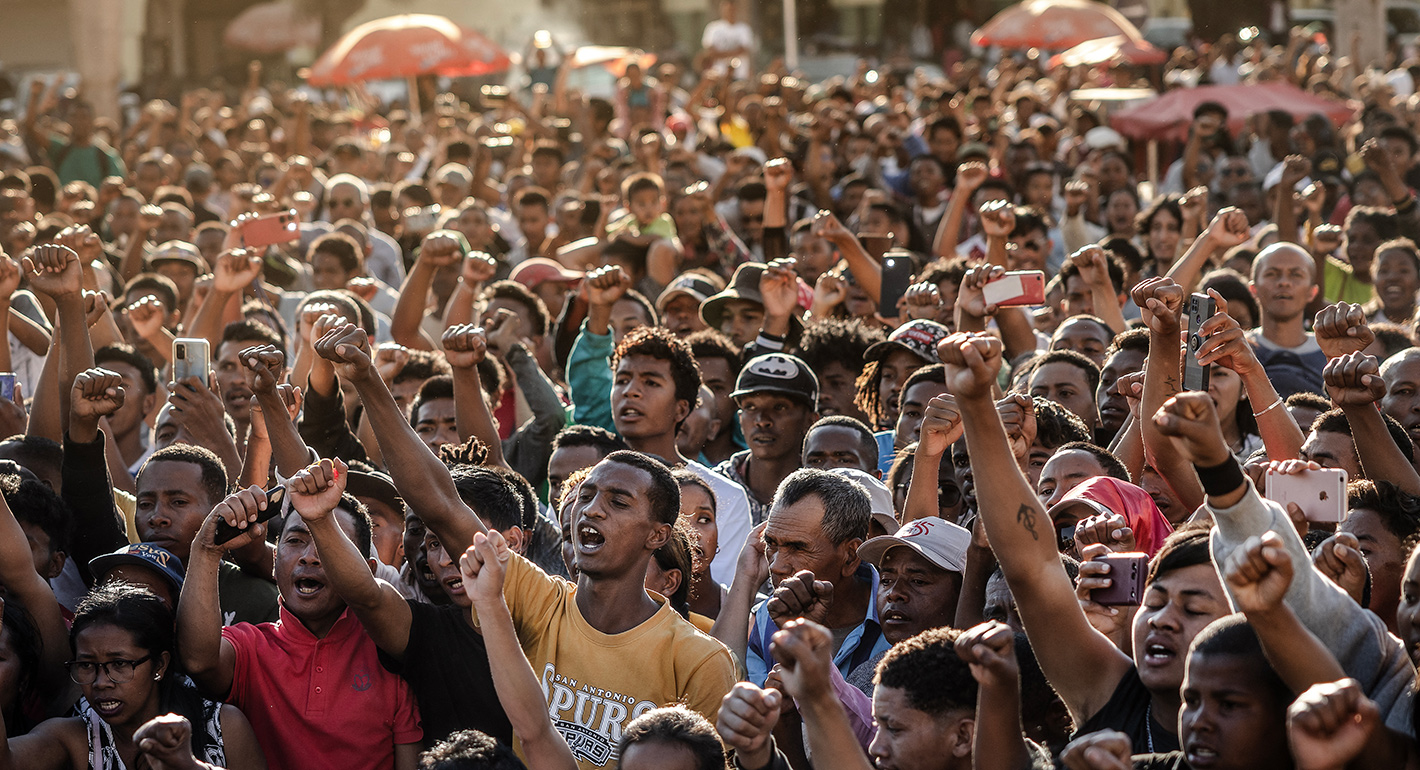
As public anger over corruption drives protests, election outcomes, and regime change around the world, the Donald Trump administration is disconnecting U.S. policy from this defining feature of global politics.
Eight years ago, one of us coauthored an article highlighting the remarkable power of public anger over corruption as a rising driver of global political change. It highlighted nearly a score of cases, from Brazil to Pakistan, where pressure arising from public anger over corruption pushed leaders out of power before the ends of their terms. At the time, it seemed that this situation might be just a passing peak, fueled by the shocking revelations emerging from the Panama Papers about deep governmental corruption in many places.
In fact, however, the trend continues—and even grows. In the intervening years, public anger over corruption has triggered large-scale protests in numerous countries, caused the demise of various governments before their time in some, and shaped electoral outcomes in many others.
Appreciating the scope and impact of this continuing phenomenon is critical to understanding the overall trajectory of global politics. Narratives about that trajectory are often dominated by various other issues—like the spread of democratic backsliding and the rise of digital repression—which, while unquestionably important, are not the full picture. It also raises hard questions for U.S. policy, given the Trump administration’s sharp turn away from the long-standing U.S. emphasis on working to limit corruption around the world.
With the enormous number of relevant cases from the past eight years (Carnegie’s Global Protest Tracker includes, for example, 151 protests primarily driven by corruption issues in eighty-three countries), we focus here just on relevant events of 2025—still more than enough to paint a telling picture.
Anger over corruption was one of the main drivers of large-scale anti-government protests globally in 2025, contributing significantly to protests in more than seventeen countries. These spanned every region and included both wealthy countries (like Spain and the United States) and developing ones (like Indonesia, Mongolia, and Nepal). They occurred mostly in democracies, where revelations about corruption are allowed to air widely and where ample political space exists for protest organization, though at least a few took place in somewhat restrictive political contexts, like Morocco and Serbia. Some lasted days; others, months. Some were triggered by specific corruption scandals; others reflected an overflowing of accumulated anger over chronic governance fecklessness and wrongdoing.
Revelations about corruption and the public reaction to them in 2025 led to the fall of three prime ministers before the ends of their electoral terms in three countries: Mongolia, Nepal, and Portugal. In Mongolia, Luvsannamsrain Oyun-Erdene resigned in June after his son’s social media photos showed an extravagant lifestyle, provoking protests and anti-corruption investigations into his family’s finances. Youth protesters in Nepal overthrew KP Sharma Oli’s government in September, after rallies against nepotism among the political elite escalated into mass mobilization against the government. And earlier, in March, Portugal’s government led by Luis Montenegro lost a confidence vote and was dissolved after a conflict-of-interest scandal broke, revealing financial ties between Montenegro’s family law firm and a company with a government contract. In subsequent snap elections, however, Montenegro was reappointed.
Corruption-related pressures also factored significantly into the fall of governments in three other countries: Bulgaria, Madagascar, and Peru. Bulgaria’s prime minister Rosen Zhelyazkov announced his resignation in December 2025 and officially stepped down in February 2026 following public protests against the government’s economic policies, controversial regional foreign policy, and failure to address corruption concerns. Madagascar’s parliament impeached president Andry Rajoelina in October after he fled the country in response to mass protests motivated by water and electricity outages, government corruption, and high living costs. And in Peru, the parliament impeached and removed president Dina Boluarte in October after months of turmoil over worsening crime and ongoing bribery and corruption scandals.
Corruption has also been playing a consequential role in electoral outcomes in many countries. Just in 2025, there were at least five cases of elections in which corruption complaints and opposition anti-corruption platforms significantly contributed to an incumbent’s loss: Bolivia, Croatia, Gabon, Romania, and Suriname.
In Bolivia, amid intensifying corruption-related frustration with the incumbent Movimiento al Socialismo party, opposition candidate Rodrigo Paz and his running mate Edman Lara of the Christian Democratic Party secured victory on a platform promising anti-corruption reforms and economic recovery. In Croatia, incumbent President Zoran Milanović of the Social Democratic Party beat opposition candidate Dragan Primorac of the governing Croatian Democratic Union. Milanović’s campaign leaned heavily into corruption accusations against the ruling government, pledging to continue to combat corruption and defend Croatia’s democracy. Gabon’s 2025 election—the first since the 2023 military coup—saw a victory by coup leader Brice Oligui Nguema, who campaigned on an anti-corruption ticket that highlighted wasteful spending under the previous government. After Romania’s 2024 election was annulled due to Russian interference and right-wing leader Călin Georgescu was barred from participating, Bucharest mayor and anti-corruption activist Nicușor Dan won the 2025 election on promises to fight corruption and uphold the country’s pro-Western position.
Lastly, Suriname’s incumbent government lost to the National Democratic Party led by Jennifer Geerlings-Simons after being weakened by a series of corruption-related scandals. These included the resignation of interior minister Bronto Somohardjo over corruption allegations, continued economic challenges resulting from outgoing president Chandrikapersad Santokhi’s corrupt economic policies, and broader disappointment with the shortcomings of government anti-corruption efforts.
Corruption emerged as a major issue in global politics in the 1990s. Democracy’s Third Wave—the opening up of political life in dozens of countries—allowed corruption’s pervasive presence to come to light in places where it had long flourished out of public view and discussion. Corruption’s spreading power as a political issue reflected an unavoidable, infuriating fact—that those supposed to be representing citizens’ interests are stealing from them. As people’s access to information about, and expectations for, governance rose, anger over corruption followed suit. Moreover, corruption is a loosely bounded idea in the public imagination that easily spans all sorts of governance complaints, from a poorly functioning healthcare or school system to crumbling infrastructure and anemic economic performance overall.
Corruption has gained still further weight as a source of anger in recent years because it aligns with other, larger currents shaping contemporary public discourse in many countries:
In short, anger over corruption has evolved from being a rising feature of the increasingly politically open world of several decades ago to being a natural part of the new global political context defined by widespread political stagnation and backsliding.
After concern over corruption started pushing its way into political debates in many countries in the 1990s, the U.S. government and other like-minded governments added anti-corruption to the global development agenda. Over the course of several decades, they built an interlocking set of anti-corruption programs and policies, and the institutional capacity to support them, within aid agencies, foreign ministries, and finance ministries.
As the issue has become more politically salient in many countries, these actors stepped up their policy responses to match. Joe Biden’s administration gave heightened attention to anti-corruption policy, setting out the first-ever U.S. national security framework for the fight against corruption. From that followed the fortification of anti-corruption institutions across different U.S. agencies, the strengthening of financial and regulatory guidelines, and the elaboration of robust transnational anti-corruption initiatives and enforcement mechanisms.
Yet as we have detailed in a recent article, the Trump administration has stepped back from the fight against corruption in countries around the world in myriad ways, including dismantling anti-corruption offices and initiatives in many parts of the government, weakening transnational financial regulations, and adopting permissive policies and practices that enable corruption to flourish at home and abroad.
But anger over corruption is more relevant than ever. By reducing the U.S. role in anti-corruption efforts, the Trump administration is not only helping corrupt actors of all sorts thrive, many of whom operate in ways inimical to U.S. economic and strategic interests, it is also disconnecting U.S. policy from the concerns and aspirations of people all around the globe. Recasting the United States as part of the problem rather than the solution to corruption diminishes U.S. influence in many unfolding processes of political change that are fundamental to the stability and overall political direction of countries across every region.

Harvey V. Fineberg Chair for Democracy Studies; Director, Democracy, Conflict, and Governance Program
Thomas Carothers, director of the Carnegie Endowment for International Peace’s Democracy, Conflict, and Governance Program, is a leading expert on comparative democratization and international support for democracy.

Research Assistant, Democracy, Conflict, and Governance Program
McKenzie Carrier is a research assistant in the Democracy, Conflict and Governance Program.
Carnegie does not take institutional positions on public policy issues; the views represented herein are those of the author(s) and do not necessarily reflect the views of Carnegie, its staff, or its trustees.

In Colombia and elsewhere in the region, the United States is trying to shape election outcomes—but at what cost?
Oliver Stuenkel, Adrian Feinberg

As the experiences of India and the UAE suggest, attaining complete sovereignty is unrealistic for most nations. But that doesn’t mean they must depend on the United States or China.
Shreya Joshi
The reinvention of democracy support needs to be carried forward without the clear leadership of one dominant player.

Richard Youngs, Thomas Carothers
What is political violence and what works to reduce it.

Political Violence Researchers, Rachel Kleinfeld, ed., Dalya Berkowitz, ed.
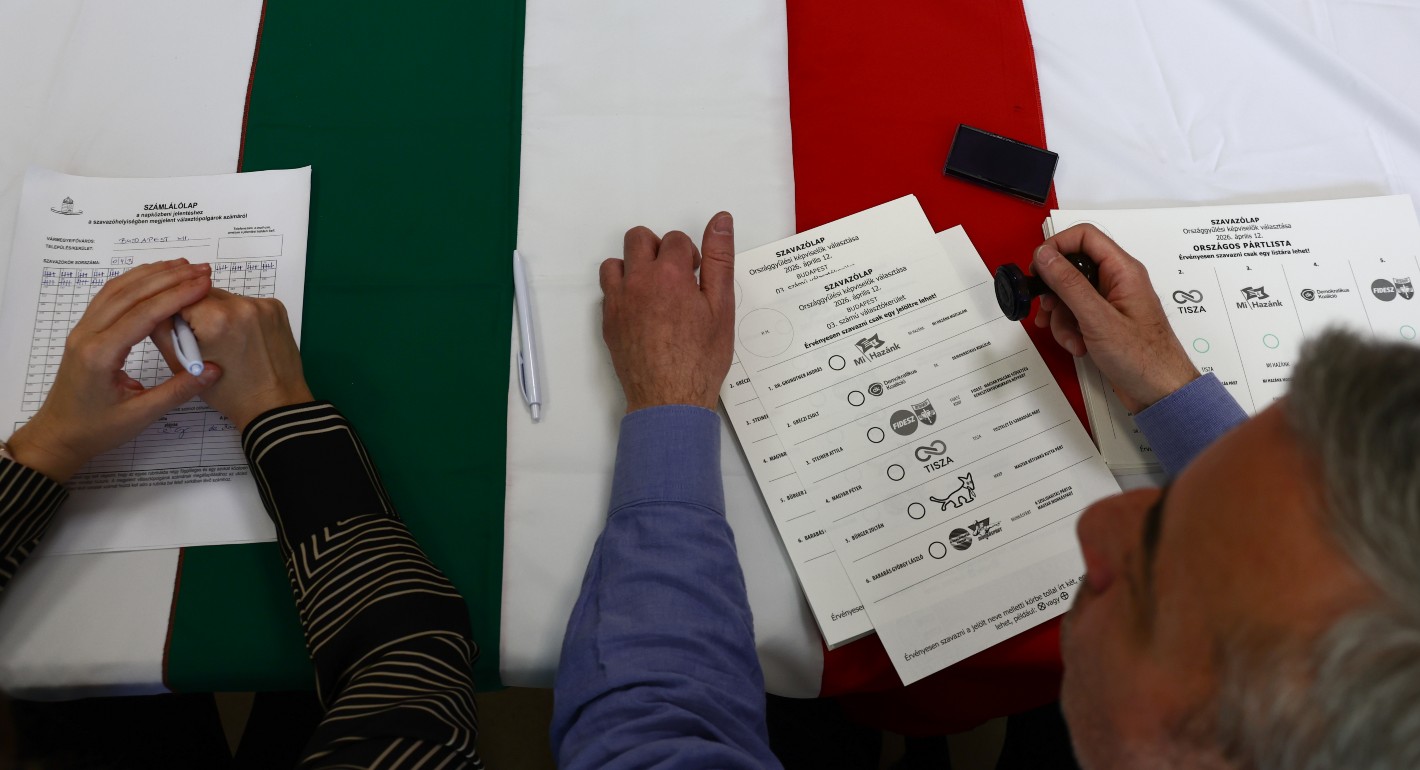
An innovative grassroots civic initiative helped defend the integrity of Hungary’s recent elections, with significant impact on the results and positive lessons for other contexts of democratic backsliding.

Hanna Folsz